
Wedding Planning Checklist: From 12 Months Out to the Big Day
A wedding planning checklist spreads the work over time so you can make every decision in the right order. The general rule: 12-10 months out, date, budget, guest count and venue; 9-6 months out, concept and key vendors such as photography and music; 5-3 months out, invitations, flowers and table design; 2-1 months out, confirmations, seating plan and rehearsals; and the final week is for checks only. This guide lists what needs to be done in each period, month by month.
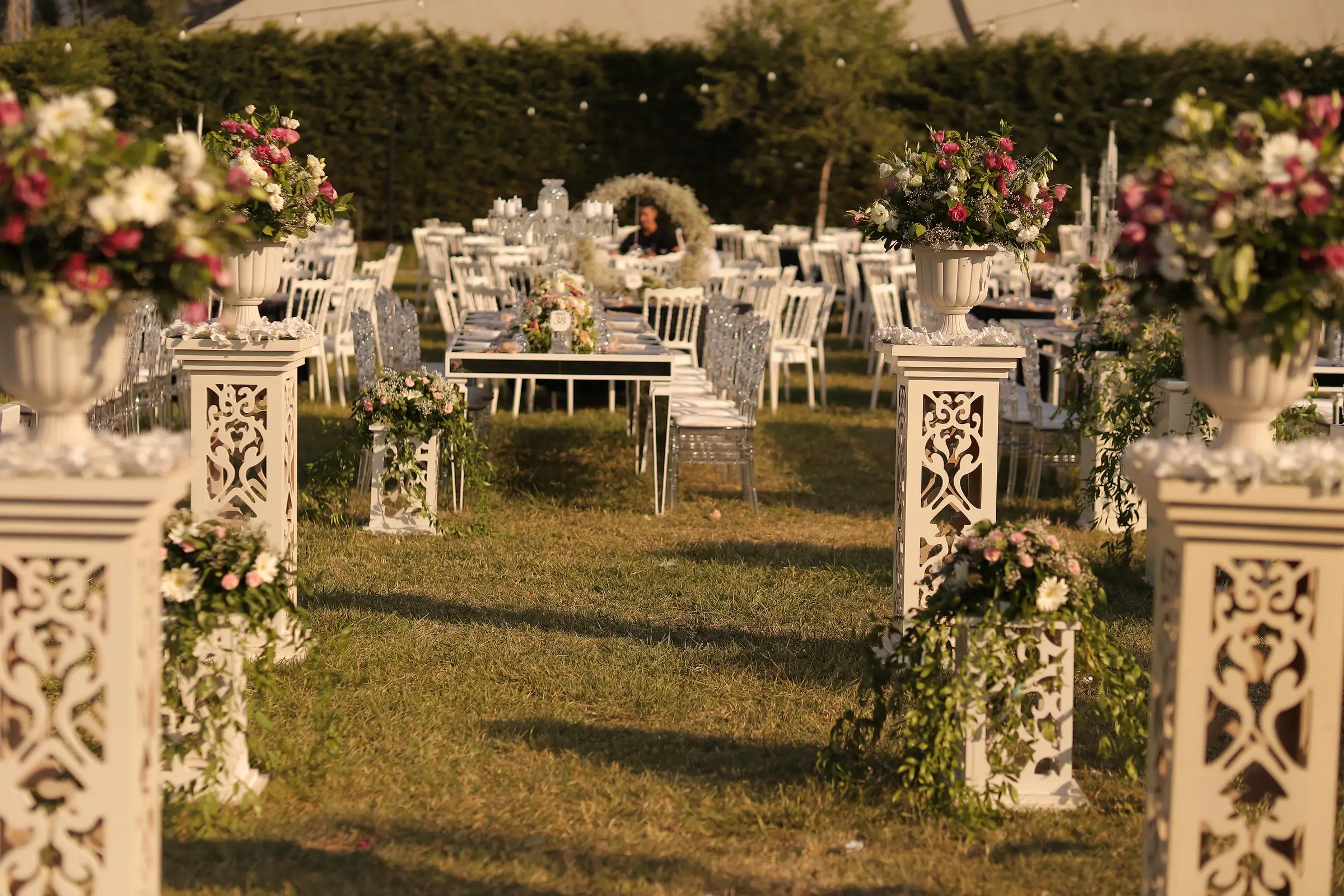
12-10 Months Out: Lay the Foundations
The first step in wedding planning is three core decisions: the date range, the total budget and the approximate guest count. Choosing a venue or concept before these are clear leads to costly changes later. Sitting down early with both families to discuss how big a wedding you have in mind, how costs will be shared and whether the wedding will be indoors or outdoors makes the process much easier.
In Balıkesir, summer weekends are the busiest period for both venues and event teams. That is why, 10-12 months out, you should start visiting venues, meet several event companies to compare portfolios and quotes, and confirm your booking once the date is set. Asking at this stage whether you can get decor, flowers, lighting and day-of coordination from a single team simplifies every step that follows.
9-6 Months Out: Concept and Key Vendors
Once the venue and date are confirmed, it is time to work on the concept that will define your wedding. Decide with your event team whether a simple and elegant, bohemian, classic or modern style suits you, along with the colour palette and overall atmosphere. An inspiration board of wedding photos you love and the venue's own character are the best guides at this stage.
During the same period, you need to book date-dependent vendors such as the photo and video team and the band or DJ; good teams' calendars fill up as early as venues do. Considering tailoring and fitting times, it is also the right moment to start looking for the wedding dress and groom's suit. If you are planning a civil ceremony at the municipal marriage office, add finding out about your preferred date and hall and the required documents to your list.
5-3 Months Out: Finalise the Details
This is when the visible face of the wedding takes shape. Finalise the guest list, choose the invitation design and send it to print; ideally, invitations should be ready to hand out 6-8 weeks before the wedding. Decide on flowers, table decor, stage and entrance design using sample images, and if possible ask your event team for a sample table setup.
Details such as the wedding cake, favours, the bride and groom's entrance and the first dance song should also be planned in this window. If you have pre-wedding events such as a henna night or engagement, set their dates and concepts so they harmonise with the wedding. Having the henna night and wedding organised by the same team makes it easier to keep colours and decor consistent.
2-1 Months Out: Confirmations and Rehearsals
Two months before the wedding, reconfirm contract details and timings with all vendors. Send out invitations and start tracking RSVPs; give the venue and catering team the final number once it is confirmed. Finalising the seating plan in this period, especially the family tables and protocol, greatly reduces last-week stress.
Final dress and suit fittings, a hair and makeup trial, a minute-by-minute run of show and any dance rehearsals fall into this window. A final walkthrough at the venue with your event team to review the stage, tables and lighting layout prevents surprises on the day. For outdoor weddings, defining a concrete plan B for rain and wind is an essential item on this list.
The Final Week and the Wedding Day
Try not to make any new decisions in the final week; this week is only for confirmations and handovers. Share the run of show with all vendors and the family members who will have roles on the day, prepare payments, and gather critical items such as the dress, shoes, rings and marriage documents in one place. Getting a good night's sleep before the wedding is the most overlooked yet most important item on the list.
On the wedding day, directing all questions to a single point of contact lets the couple and their families enjoy the moment. Checking the setup, timing the teams and coordinating moments such as the bride and groom's entrance, cake cutting and first dance are the responsibility of the on-site coordinator. Handing your phone to someone close and focusing only on the day itself puts you right in the middle of the moments you will remember for years.
Practical Ways to Keep Your Budget and List on Track
In a long planning process, the biggest risk is small items slipping through the cracks. Keeping all expenses and payment dates in a single spreadsheet, setting aside about 10 percent of the total budget for unexpected costs and keeping every vendor agreement in writing are the most practical ways to stay in control.
The most effective way to shorten your checklist is to bring related tasks together under one team. When venue decoration, flowers and table design, lighting, staging and day-of coordination are handled by the same team, dozens of separate meetings, quotes and confirmations come down to a single calendar. The planning period then stops being a source of stress and becomes something to look forward to.
Frequently asked questions
How many months before the wedding should planning start?
Ideally, planning should start 8-12 months before the wedding. Venues and event teams should be booked early, especially for summer weekend weddings. A wedding can be planned in less time, but you will need to be more flexible about the date and venue.
What is the first thing to do on a wedding checklist?
The first step is to set the date range, total budget and approximate guest count. The choice of venue, concept and vendors is shaped by these three decisions.
How far in advance should wedding invitations be sent?
Invitations are ideally sent 6-8 weeks before the wedding. Letting out-of-town guests know earlier makes it easier for them to plan travel and accommodation.
Can a wedding be planned in 3 months?
Yes, but planning needs to be tight and decisions quick. Being flexible about the venue and date and getting decor, flowers, lighting and coordination from a single team speeds up the process considerably.
How much of the wedding budget should be set aside for unexpected costs?
Setting aside about 10 percent of the total budget for unexpected costs is a common and safe approach. This buffer helps cover last-minute changes and additional guests.
At which stages of wedding planning does Şehr-i Sanat Organizasyon help?
Şehr-i Sanat Organizasyon supports every stage, from venue selection advice to concept and decor design, from flower, table, lighting and stage setup to on-site coordination on the wedding day, in Balıkesir, especially in central Karesi and Altıeylül as well as the Edremit and Bandırma regions.
Want professional help with this?
When wedding planning moves in the right order, it is an enjoyable process rather than an exhausting one: first the date, budget and guest count; then the venue and vendors; then the concept and details; and finally confirmations and rehearsals. By following this checklist step by step, you can move forward without missing a single item. To plan your preparations from venue decoration to day-of coordination from a single source in Balıkesir and the surrounding area, you can contact Şehr-i Sanat Organizasyon.
Related service: Wedding Organization in Balıkesir